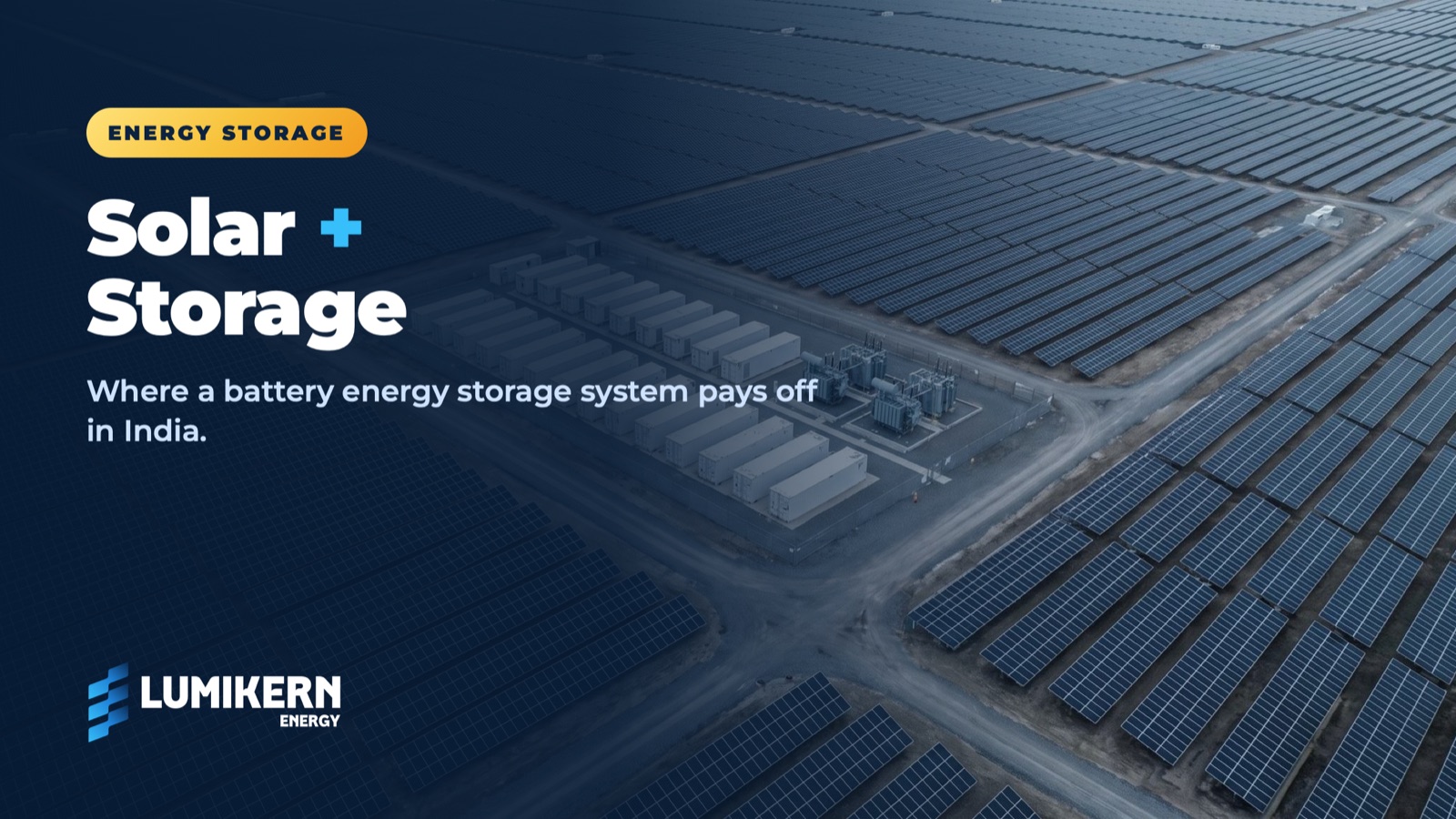
Solar produces the most power at midday; demand and prices peak in the evening. A battery energy storage system (BESS) moves energy from one to the other. India’s storage demand is being pulled by tenders that pay for firm, dispatchable renewable power and by industrial buyers who want to stop paying peak tariffs.
Where storage pays off
The main use cases in India today:
- Firm and dispatchable renewable energy: 2-hour and 4-hour configurations map onto evening-peak delivery obligations.
- Solar-plus-storage: shift the afternoon solar peak into the evening and cut curtailment on constrained feeders.
- C&I peak shaving: behind-the-meter storage for factories, campuses and data centres to reduce demand charges and use time-of-day tariffs.
- Hybrid plants: wind–solar–storage plants selling firm blocks of power under open access, at better tariffs and utilisation.
What to check in a BESS container
A container is only as good as its chemistry, cooling and safety case. Look for:
- LFP cells, which are cobalt-free
- Liquid cooling, for even cell temperatures and longer life
- Cycle life: Lumikern’s container is rated for more than 10,000 cycles
- Safety certification: UL 9540A thermal-runaway reports, UL 9540, NFPA 68, NFPA 69 and NFPA 855
- A factory acceptance test before it ships
The Lumikern BESS container
A liquid-cooled LFP container with 5,015 kWh nominal energy in a 20-ft container, a 0.5P charge and discharge rate, and round-trip efficiency above 93.7% at 0.5C. It is integrated, charged, discharged and signed off in the factory in Indore, and available in scalable 1–5 MWh configurations.
Pairing it with Kern 132 modules keeps solar and storage under one supplier and one warranty conversation.
FAQs
Talk to a Lumikern engineer
Share your capacity, location and timeline, and we will come back to you by email.